Compare cheap car hire in the UK with practical tips on airports, driving rules, motorways and prices.

The United Kingdom is a great destination for a road trip, whether you’re exploring cities, countryside or coastal routes. From Scotland’s Highlands to England’s national parks and Wales’ coastline, having a car gives you the flexibility to travel at your own pace.
Public transport is strong between major cities, but a rental car becomes essential once you head into rural areas.
Where You’ll Pick Up Your Car
Most travellers collect their car at airports or major city locations.
- Car hire desks are located inside arrivals halls
- Vehicles are collected from airport car parks or nearby rental areas
- At large airports, you may need a short walk or shuttle
Popular pickup locations include Heathrow Airport, Gatwick Airport, Edinburgh Airport, Luton, Stansted, Liverpool, Birmingham, East Midlands and Manchester Airport.
Flights to the UK
The UK has extensive air connections from Ireland and worldwide.
- Frequent daily flights from Dublin and regional Irish airports
- Short flight times – typically under 1 hour to many UK cities
Air travel is quick and widely available.
Car Hire Companies in the UK
You’ll find a wide range of international and local providers.
- Hertz
- Avis
- Budget
- Europcar
- Sixt
- Enterprise
- Arnold Clark (local)
Availability is generally excellent across the country.
Typical Car Hire Prices in the UK
| Season | Small Car | Mid-size | Larger Vehicle |
|---|---|---|---|
| January – March | £25 – £60 | £60 – £100 | £100 – £160 |
| April – June | £35 – £80 | £80 – £130 | £130 – £200 |
| July – August | £60 – £130 | £130 – £200 | £200 – £300 |
| September – October | £40 – £90 | £90 – £140 | £140 – £220 |
| November – December | £30 – £70 | £70 – £110 | £110 – £180 |
What Type of Car Should You Choose?
Your choice depends on your travel plans.
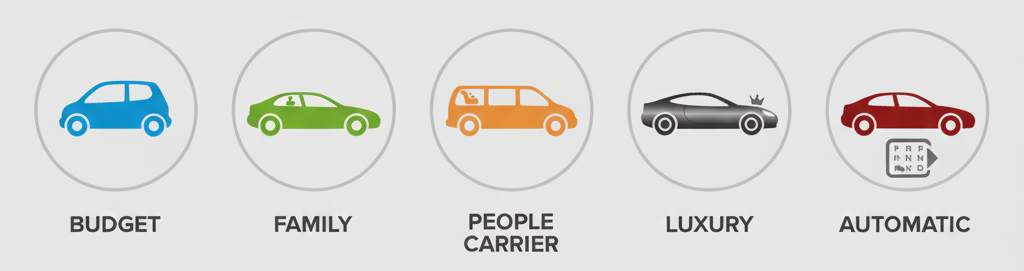
- Small cars – ideal for cities and narrow roads
- Family cars – best for longer journeys
- Estate cars – useful for luggage
- People carriers – suitable for groups and families
Smaller vehicles are often easier to manage in older towns and rural areas.
Driving in the UK
Driving is on the left-hand side of the road, with speed limits in miles per hour.
Key rules:
- Seatbelts are mandatory
- Mobile phone use while driving is prohibited
- Roundabouts are common
Driving is generally straightforward outside major cities.

Motorways and Tolls
Most motorways in the UK are free to use.
- No widespread toll system
- Some exceptions (e.g. certain bridges and tunnels)
- Congestion charges apply in central London
Always check local rules if driving into city centres.
Where a Car is Most Useful
A car is especially useful in these areas:
- Scottish Highlands – remote and scenic routes
- Lake District – national park access
- Cornwall – coastal towns and beaches
- Wales – mountains and countryside
Public transport is limited in many rural areas.
City Driving and Parking
Driving in major cities can be challenging.
- Traffic congestion is common
- Parking can be expensive and limited
- Park-and-ride options are often available
In cities like London, you may not need a car.
For travel advice, see VisitBritain.

Frequently Asked Questions
Do I need a car in the UK?
Not for cities, but very useful for rural and scenic areas.
Which side of the road do you drive on?
On the left-hand side.
Is driving in the UK easy?
Yes, though cities can be busy.
Are there toll roads?
Mostly no, with a few exceptions.
Are automatic cars available?
Yes, though manual vehicles are more common.
Can I rent a 7 Seater in the UK?
Yes, these are widely available.
Is fuel expensive?
Fuel prices are relatively high.
Is parking difficult?
It can be in cities, but easier outside them.
Do I need a credit card?
Yes, most rental providers require one.
Can I drive between regions easily?
Yes, the UK has an extensive road network.