Compare car hire at Isle of Man Airport with major providers, pickup process, driving tips and routes across the island for your visit.
Isle of Man Airport (Ronaldsway) is the island’s only commercial airport, located in the south near Ballasalla, around 10–15 minutes from Douglas. It is a compact regional airport where car hire is very straightforward, with all services located directly beside the terminal and walking distance to the main car park.
For most visitors, hiring a car is the easiest way to explore the island properly. Public transport is available but limited outside main routes, and many of the Isle of Man’s best coastal drives, villages, and viewpoints are spread out along winding roads.
Flights from Ireland
There are direct flights from Ireland to Isle of Man Airport. Services from Dublin operate seasonally or on limited schedules depending on demand, while some travellers from Ireland connect via Manchester, Liverpool, or London airports.
Car hire companies at Isle of Man Airport
Car hire desks are located inside the small arrivals hall, with vehicles parked directly outside in the adjacent airport car park. Everything is within a very short walking distance, and there are no shuttle transfers required.
- Hertz – Terminal desk in arrivals with vehicles parked directly outside the building
- Avis – Located inside the terminal with short walk to designated airport bays
- Europcar – On-site counter in arrivals hall; cars collected from adjacent parking area
- Enterprise – Desk inside terminal with keys issued before walking to nearby vehicles
- Budget – Shared operations with Avis in the arrivals area
Because the airport is small, rental stock is limited compared to mainland UK airports, so booking in advance is strongly recommended during TT races and summer peak season.
Pickup process at Isle of Man Airport
Collection at Ronaldsway is one of the simplest airport rental experiences in the British Isles. After landing, passengers are already just a few steps from the arrivals hall and car hire desks, with no internal terminals or long walks involved.
Once paperwork is completed, you’ll be directed straight outside to the adjacent car park. Vehicles are usually parked in clearly marked bays within sight of the terminal entrance, which makes orientation easy even for first-time visitors.
One practical detail on the Isle of Man is that airport traffic is very light outside peak arrival times, so you can often leave the rental area within minutes of receiving your keys. However, during Isle of Man TT or Southern 100 race periods, both queues and availability can be significantly more constrained than usual.
Fuel stations are available a short drive from the airport in Castletown and Ballasalla, so it’s worth planning a quick top-up if you’re heading directly into rural areas or coastal routes.
Choosing the right car on the Isle of Man
Car choice here is less about distance and more about road type. The island has a mix of smooth main roads and narrow rural lanes, often bordered by stone walls or hedgerows.
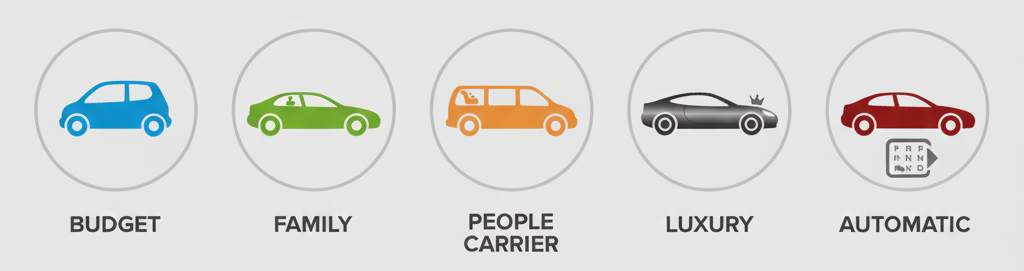
- Economy cars – Ideal for short stays, Douglas visits, and general island driving; easy to park and efficient on short distances
- Compact cars – A strong all-round option for touring the island loop and visiting towns like Peel, Ramsey, and Castletown
- Family cars – Useful during busy summer periods or when carrying luggage for multi-day stays
- SUVs – Chosen mainly for comfort on rural roads and higher driving position rather than off-road use
- Small automatics – Limited availability, but useful for visitors unfamiliar with narrow rural driving conditions
One local consideration is road width. Many scenic coastal stretches are narrow with passing places, so smaller cars often feel more relaxed and practical than larger vehicles.
Driving from Isle of Man Airport
The airport sits close to the main A5 and A7 routes, giving quick access to both the southern villages and the island’s central road network.
- Douglas – around 15 minutes
- Castletown – around 5–10 minutes
- Peel – around 35–40 minutes via inland routes
- Ramsey – around 40–45 minutes via the island’s central cross routes
The famous “TT course” road network also runs through Douglas, and many visitors use the airport as a starting point for exploring sections of the route at a slower, tourist pace outside race periods.
Fuel, driving rules and local considerations
The Isle of Man has its own driving regulations, separate from the UK system in some areas, although most rules are familiar to UK and Irish drivers.
- No national speed cameras system, but enforcement still applies locally
- Roads can narrow quickly outside towns with limited lighting
- Fuel stations are spread across main settlements rather than rural areas
- During TT races, road closures can affect travel times significantly
Driving is generally relaxed, but awareness of changing road conditions is important, especially on coastal routes and hill sections.
Official information
FAQs – Car hire Isle of Man Airport
Is car hire available directly at Isle of Man Airport?
Yes, all rental desks are located inside the terminal with vehicles parked just outside.
Do I need a shuttle to collect my hire car?
No, everything is within a short walking distance of the arrivals hall.
How far is Douglas from the airport?
Douglas is approximately 15 minutes away by car.
Is it easy to drive around the Isle of Man?
Yes, but some rural roads are narrow and require careful driving.
Are automatic cars available?
Yes, but availability is limited compared to manual vehicles.
Do I need to book car hire in advance?
Yes, especially during TT race weeks and summer peak season when demand is very high.
Is fuel easy to find on the island?
Fuel stations are available in main towns, but less common in rural areas.
Are there toll roads on the Isle of Man?
No, there are no toll roads on the island.
Can I drive the TT course?
Yes, outside race periods the public road circuit can be driven normally.
What documents are needed to hire a car?
A valid driving licence, passport or ID, and a credit card in the main driver’s name are typically required.