Compare cheap car hire in Austria with practical tips on airports, driving rules, mountain routes and prices.

Austria is one of the best destinations in Europe for a driving holiday, especially if you plan to explore the Alps, lakes or smaller towns beyond the main cities.
Public transport is excellent between major cities, but a rental car gives you the flexibility to reach mountain resorts, scenic routes and rural areas at your own pace.
Where You’ll Pick Up Your Car
Most visitors collect their rental car at the airport or in city centres.
- Car hire desks are located inside arrivals halls or transport hubs
- Vehicles are collected from multi-storey car parks or nearby lots
- At airports, everything is typically within walking distance
Popular pickup locations include Vienna Airport, Salzburg Airport and Innsbruck Airport.
Direct Flights from Ireland
Austria has good year-round connectivity with Ireland.
- Dublin → Vienna
- Dublin → Salzburg (seasonal)
- Dublin → Innsbruck (winter ski season)
Flight times are typically around 2.5 to 3 hours.
Car Hire Companies in Austria
You’ll find a strong mix of international and European providers.
- Hertz
- Avis
- Budget
- Europcar
- Sixt
- Enterprise
Availability is generally excellent, especially at major airports.
Typical Car Hire Prices in Austria
| Season | Economy | Family Car | Larger Vehicle |
|---|---|---|---|
| January – March (Ski Season) | €40 – €90 | €90 – €150 | €150 – €240 |
| April – June | €35 – €80 | €80 – €130 | €130 – €200 |
| July – August | €60 – €120 | €120 – €180 | €180 – €260 |
| September – October | €40 – €90 | €90 – €140 | €140 – €210 |
| November – December | €35 – €75 | €75 – €120 | €120 – €180 |
What Type of Car Should You Choose?
Your choice depends on where and when you’re travelling.
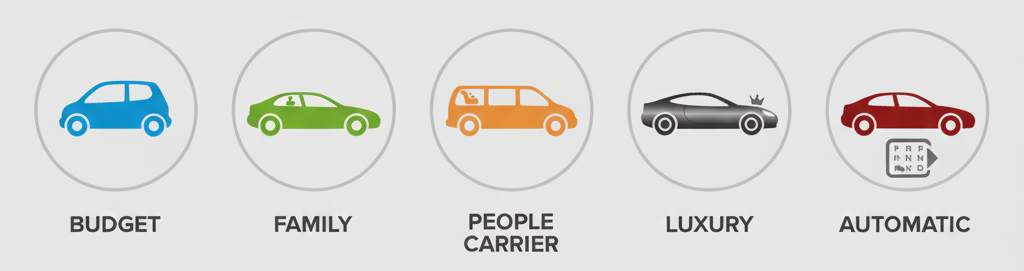
- Compact cars – ideal for cities and short trips
- Family cars – comfortable for longer journeys
- Estate cars – useful for luggage or ski equipment
- All-wheel drive vehicles – recommended for Alpine routes in winter
Winter tyres are mandatory in winter conditions.
Driving in Austria
Driving is on the right-hand side of the road. Roads are modern, well maintained and clearly signposted.
Key rules to know:
- A motorway vignette (toll sticker) is required
- This is usually included with rental cars
- Speed limits are strictly enforced
Mountain roads can be narrow and winding, especially in Alpine regions.
Motorways and Tolls
Austria uses a vignette system for motorways.
- Required for all motorway driving
- Usually included in your rental car
- Some Alpine passes and tunnels have additional tolls
Always check with your rental provider before travel.
Where a Car is Most Useful
A car is particularly valuable outside the main cities.
- Tyrol region – mountain scenery and ski resorts
- Salzkammergut – lakes and villages
- Grossglockner High Alpine Road – scenic drive
- Vorarlberg – quieter western region
In cities like Vienna, a car is usually unnecessary.
Cross-Border Driving
Austria is well positioned for multi-country trips.
- Germany – easy access via Munich
- Italy – via Alpine passes
- Switzerland – western routes
Most rental companies allow cross-border travel, but it must be declared.
For travel advice, see Austria tourism website.
Frequently Asked Questions
Do I need a car in Austria?
Not for cities, but very useful for rural and Alpine areas.
Do I need a vignette?
Yes, but it is usually included with rental cars.
Is driving in Austria easy?
Yes, roads are modern and well maintained.
Are winter tyres required?
Yes, in winter conditions they are mandatory.
Are automatic cars available?
Yes, though manual vehicles are common.
Can I rent a 7 Seater in Austria?
Yes, these are widely available.
Are there toll roads?
Yes, via the vignette system and some Alpine routes.
Can I drive into other countries?
Yes, but check with your rental provider first.
Is fuel expensive?
Fuel prices are similar to other European countries.
Which side of the road do you drive on?
On the right-hand side.